

Can You Finance a New Roof? How Roof Financing Works
Yes, you can finance a new roof — and a lot of Tennessee homeowners do. A roof replacement is a major investment, and financing spreads that cost into manageable payments instead of one big lump sum. Here's how it works, what to watch for, and how to get started without surprises.
Why Folks Finance Roofs
Most roofs don't wait for a convenient time. Hail damage in April. A leak that turns out to be end-of-life shingles in July. The roof needs replacing now, but the savings account says otherwise. Financing exists for exactly that gap:
- Emergencies don't wait: storm damage and active leaks need fixing now, not after another year of saving.
- Keep your cash reserves: even if you could pay cash, keeping reserves for everything else life throws at you is often the smarter move.
- Better materials become reachable: financing can be the difference between basic shingles now and the longer-lasting option you'd prefer — or between a repair that limps along and a full replacement that actually solves the problem.
A roof's also one of the more sensible things to finance. It's a long-lived asset protecting everything underneath it.
How Roof Financing Usually Works
Pretty straightforward:
1. Get your estimate first. Know the real project cost before you look at financing. An honest, itemized, no-pressure estimate gives you the number to work with.
2. Check your options. Through Rex Roofing, you can explore financing options through Enhancify. Checking your options is quick and uses a soft credit inquiry — meaning it won't affect your credit score.
3. Look at what's offered. Different lenders work with different credit situations. You'll see what's available for your circumstances before you commit to anything.
4. Pick one and move forward. Once you've chosen the option that fits, the project moves on your schedule.
The whole point: you get the roof your home needs now, and the payments fit your budget. No limping through another storm season with a failing roof.
What to Ask Before You Sign Anything
Financing's a tool, and good ones are transparent. Before you commit, make sure you understand:
- The total cost of borrowing, not just the monthly payment. A low payment stretched over a very long term can cost more in the end.
- Whether there's a prepayment penalty for paying the balance off early.
- How the lender pays out — whether the money goes straight to the contractor or to you.
- What happens if the project changes — if we find decking repairs mid-project and the scope adjusts, how's that handled?
We keep our part simple and flat-rate: the estimate is the estimate. No pressure, no games. Whatever you see in your financing options is based on real numbers from your project.
Financing vs. Insurance: Don't Mix Them Up
This one trips people up every spring. If your roof was hit by a storm, insurance and financing are two separate paths:
- Insurance covers sudden, covered damage — hail or wind, per your policy. A claim goes through your carrier and adjuster.
- Financing covers whatever cost you decide to take on — your deductible, a replacement insurance won't touch like age-related wear, or a full project with no claim involved.
Some homeowners use both: insurance for the covered part, financing for the deductible or upgrades beyond what insurance pays. We can't promise anything about insurance outcomes — that's between you and your carrier — but we can document what we find, honestly.
What If My Credit Isn't Great?
Everybody asks this one, and nobody likes asking it out loud. Straight answer: financing options exist across a range of credit situations. That's exactly why checking your options starts with a soft inquiry — you see what's actually available to you, no hit to your credit score, no commitment, and it costs nothing to look.
Frequently Asked Questions
How much does roof financing cost?
Depends on the project cost, the lender, and the terms you pick. What matters is the full picture: the monthly payment, the length of the term, and the total you'll pay over time. Get those three numbers for any option before you decide.
How long does approval take?
Varies by lender, but plenty of homeowners get their options fast. It's built to be quick so projects don't stall on paperwork.
Can I finance a repair, or only a full replacement?
Both can work, depending on the project size and what's offered to you. If a repair's the right call for your roof, the financing process is the same.
Getting Started
The order that works best: free inspection first, so you know what your roof actually needs. Then explore financing with real numbers in hand. That way you're deciding about your home with full information — not guessing.
Rex Roofing offers financing through Enhancify for homeowners across Williamson, Davidson, Dickson, Hickman, Cheatham, Rutherford, and Maury County. Checking your options is quick, it's a soft credit inquiry that won't touch your credit score, and you're never locked in by looking. Learn more at rexroofingtn.com/financing, or call us at 615-801-0959 for a free inspection and estimate — virtual estimates within 24 hours.

When Is the Best Time of Year to Replace a Roof in Tennessee?
People ask me this one all the time. For Middle Tennessee, the best window is late spring through fall — roughly April to November — when temperatures are mild, storms are manageable, and shingles seal the way they should. And if you're planning ahead, fall's the sweet spot: summer heat's backed off, crews move efficiently, and your new roof's in place before winter. But here's the honest part: a roof that needs replacing gets replaced whenever it needs it. Tennessee winters are mild enough that we install year-round.
Why Fall's the Sweet Spot
For a planned, non-emergency replacement, October and November in Williamson and Maury County are hard to beat:
- Good working weather: shingles seal best when it's warm enough for the adhesive strips to activate but not so hot the material softens. Fall temperatures sit right in that zone.
- Fewer storm interruptions: spring's hail and high-wind events are mostly behind us, so crews can string workdays together without weather delays.
- Winter readiness: a new roof with fresh flashing, sealed valleys, and intact shingles goes into winter at its strongest — right when you want it.
- Scheduling: fall fills up fast, though. Folks who wait until October to call often end up with November or December slots. Booking in late summer for a fall install is the smart move.
Spring: Storm Season Changes the Math
Spring — roughly March through May — is the busiest season for Tennessee roofers, and not because the weather's ideal. It's when storm damage shows up. Hail around Thompson's Station, Nolensville, Spring Hill, and Columbia reveals itself in April and May, when homeowners start noticing lifted shingles or granule loss after the big spring storms.
Spring installs are fine weather-wise. But two things are true: schedules book out fastest, and emergency repair work can bump planned replacements. If your roof's borderline and you know it, get on the schedule in late winter for a spring install. Beats competing with storm-damage demand.
Summer: Doable, With Caveats
We work through Tennessee summers every year — summer replacements are completely common. But go in eyes open:
- Heat slows crews down: 95-degree days with heat index over 100 mean earlier starts, more breaks, sometimes split-day scheduling. Good companies plan for it.
- Shingle scuffing: shingles get soft in high heat and can scuff during install if the crew isn't careful. Experienced installers know how to handle material when it's hot.
- Afternoon thunderstorms: summer pop-ups can pause a tear-off mid-day. A professional crew never leaves a roof exposed overnight — that's non-negotiable — but weather delays happen.
The upside: long daylight hours and mostly predictable weather patterns.
Winter: More Possible Here Than Most Places
Tennessee winters are mild compared to the Midwest or Northeast. December through February installs are absolutely doable — with honest caveats:
- Shingle sealing: asphalt shingles need enough warmth for the adhesive strips to bond. Cold-weather installs take hand-sealing and extra care, and some manufacturers have temperature guidelines tied to warranties. A good contractor knows those rules and follows them.
- Shorter days: less daylight means the job can stretch across more days.
- Ice and rain days: crews can't work safely on ice, so winter scheduling carries more weather risk.
The upside: it's the off-season, so scheduling's easiest and pricing is sometimes most flexible. Metal roofing doesn't depend on adhesive sealing the way shingles do, so it's less temperature-sensitive — winter's a fine season for a metal install.
When Timing Doesn't Matter: Emergencies
Everything above is about planned replacements. If your roof's actively leaking, has major storm damage, or shows structural problems, the best time to replace it is now — whatever month "now" is. Water doesn't wait for October. And the damage a failing roof does between now and the "ideal" season can dwarf whatever convenience you gained by waiting.
How Far Ahead Should You Book?
For a planned fall replacement, call in late summer. For spring, call in late winter. Quality local roofers in Middle Tennessee generally run a few weeks out in peak season — if a contractor can start tomorrow in October, ask why. The established companies stay booked.
One practical tip: if you're financing the project, start that conversation early too. Getting your options lined up while you're scheduling means no financing delays once your install date hits.
Frequently Asked Questions
Can a roof be replaced in the rain?
No — not properly. Decking has to be dry for underlayment and shingles to bond right, and crews can't work safely on wet slopes. Reputable roofers watch the forecast and won't start a tear-off with rain coming.
How long does a roof replacement take?
Most residential replacements around here take one to two days of actual work, depending on size, complexity, and material. Weather and decking repairs can stretch that.
Is there a "cheapest" month for roof replacement?
Pricing's driven more by material costs and demand than by the calendar. Off-season (late winter) can offer more scheduling flexibility. But the biggest cost lever is material choice — shingles vs. metal — not timing.
Whenever the calendar says you need it, the first step's the same: an honest assessment. If you're in Williamson, Davidson, Dickson, Hickman, Cheatham, Rutherford, or Maury County, call Rex Roofing at 615-801-0959. We'll tell you straight whether your roof needs replacing now, can wait for the ideal season, or just needs a repair. Free inspection and estimate, with virtual estimates within 24 hours.

What Does a Free Roof Inspection Actually Include?
A real free roof inspection covers the whole system: shingles, flashing, vents and pipe boots, valleys, gutters, and the attic underneath. When it's done you should have photos of what was found and an honest written estimate — not a pressure pitch. If some guy's in and out in ten minutes and ends with "you need a new roof, sign here," that wasn't an inspection. Here's what a thorough one actually looks like.
Outside: The Roof Itself
This is where the inspection starts, and where we spend most of our time:
- Shingles: missing, cracked, curling, or lifted tabs. Granule loss — check your gutters and downspout outlets for piles of granules, because that's where they wash. Hail bruising, which can look like nothing from the ground but shows up clear as day up close.
- Flashing: the metal around chimneys, skylights, walls, and dormers. Cracked caulking, rust, lifted edges, or gaps are an open invitation to water. Flashing failures are some of the most common leaks we find in Middle Tennessee.
- Vents and pipe boots: plumbing vent boots are notorious around here. That rubber collar dries out in Tennessee heat and cracks, usually around year 10–12, while the shingles around it still look fine. Static vents and ridge vents get checked for damage and loose fastening.
- Valleys: where two roof planes meet and all the water funnels. Worn shingles, built-up debris, or old cut valleys get flagged.
- Ridge cap and hips: the roof's highest-stress edges. We check them for wind damage and loosening.
- Chimney: masonry cracks, missing caps, and the seal where flashing meets the chimney.
Gutters, Fascia, and Drainage
We look down as well as up:
- Gutters: sagging sections, gutters pulling off the fascia, heavy granule buildup (a sign your shingles are wearing), standing water, clogs. In fall, our oaks and maples fill everything.
- Fascia and soffit: rot, water staining, soft spots where gutters or drip edge have let water get behind the system.
- Downspouts and grading: water should be heading away from the foundation, not pooling up against it.
Clogged or failing gutters don't just overflow. They push water back under the shingle edge and into the roof deck.
Inside: The Attic Tells the Truth
If your inspector skips the attic, the inspection isn't finished. The underside of the deck shows what the surface hides:
- Moisture signs: dark staining on decking or rafters, damp insulation, musty smells. Evidence of leaks past or present, including ones that never showed up as ceiling stains.
- Daylight: pinpricks of light through the decking mean holes or gaps.
- Ventilation: proper intake at the soffits and exhaust at the ridge or other vents. Poor ventilation cooks shingles from below and it's a big reason roofs die early in Tennessee heat.
- Insulation: compressed or water-damaged insulation works against your energy bills and your roof both.
What You Should Walk Away With
A free inspection that doesn't hand you anything is just a sales visit. You should get:
1. Photos of what was found. The good, the bad, all of it. Any roofer worth hiring documents what they see.
2. A plain-language summary. What's fine, what needs attention, what's urgent — in that order.
3. A written estimate if work's recommended. Itemized. No pressure. Flat-rate, no-pressure pricing is how we work: the number is the number.
Our inspections are free, and we do virtual estimates within 24 hours too. Send us photos or do a quick video walkthrough and we'll get you an honest number without a ladder being involved.
How to Prepare (Two Minutes)
You don't need to do much, but a little prep helps:
- Clear a path to the attic if you have one — move storage boxes away from the scuttle or stairs
- Jot down anything you've noticed: stains, drips, shingles in the yard after storms, roughly how old the roof is
- Unlock the gates and bring the dogs in — we've got to walk the full perimeter
Red Flags: When "Free Inspection" Is a Trap
Free inspections are standard in this industry. But during spring storm season in Tennessee, some outfits use the phrase as bait:
- Door-knockers after a storm pushing you to sign a "contingency agreement" right there on the porch
- Inspectors who won't show you photos of what they found
- Instant "total replacement" verdicts with no documentation and a lot of pressure
- No license or insurance proof when you ask. Always ask.
A local contractor with 15+ years in business and 73 five-star Google reviews has nothing to hide from those questions.
Frequently Asked Questions
How long does a roof inspection take?
A thorough one usually runs 30–60 minutes on the roof and in the attic, depending on size and complexity. Ten-minute "inspections" aren't inspecting anything.
Should I get one if I don't see any problems?
Yes — especially here. Hail damage and early flashing failure are often invisible from the ground, and Tennessee spring storms can do real damage that doesn't leak until months later. A yearly look is cheap insurance.
Will the inspector try to sell me a roof I don't need?
A trustworthy one won't. That's the whole point of the photos and the written summary — you should be able to see exactly what they saw and why they're recommending what they're recommending.
Whether your roof is 8 years old or 28, an honest inspection is how you know where you stand. If you're in Williamson, Davidson, Dickson, Hickman, Cheatham, Rutherford, or Maury County, call Rex Roofing at 615-801-0959. Free inspection and estimate, documented with photos, no pressure. Virtual estimates within 24 hours.

My Roof Is Leaking: What to Do Right Now
Water coming through your ceiling? Do three things first: catch it inside with buckets and towels, move your furniture and valuables out of the way, and call a roofer. And do not climb up on a wet roof — that's the fastest way to turn a leak into an ER visit. Here's the whole thing in the order that matters.
Step 1: Catch the Water Inside
First job is damage control inside the house, because water keeps moving once it's in:
- Catch the drips with buckets, pots, trash cans — whatever you've got. If water's bulging in a ceiling bubble, poke a small drain hole with a screwdriver at the lowest point — bucket underneath first — so it drains in one controlled stream instead of spreading.
- Move things out of the way: furniture, electronics, rugs, anything that shouldn't get wet. Pull wet stuff out of the room entirely if you can.
- Lay down towels or tarps around the drip zone to catch splatter and protect the floor.
- If water's near electrical: kill the breaker to that circuit. Water and electricity don't negotiate.
Step 2: Stay Off the Roof in Bad Conditions
Wet shingles are slick as ice. Up on a slope in the dark or in lightning is genuinely dangerous. Wait for daylight and dry weather — or better yet, let a roofer do the climbing. That's what we're set up for.
One exception: if water is pouring in and you can safely throw a tarp from the ground or a secure ladder spot, a tarp can slow things down. But a tarp flung up in wind and rain by a stressed-out homeowner rarely holds, and it's not worth a fall. When in doubt, skip it.
Step 3: Take Photos Before You Clean Up
Before you move things and mop up, grab your phone:
- The drip spot and any ceiling stains or bubbling
- Water-damaged belongings and furniture
- The affected rooms from a few angles
- Later, when it's safe, the roof itself from the ground (missing shingles, damaged flashing, debris)
You might never need them. But if you end up talking to your insurance company, dated photos from the day you found it are the most useful thing you can have. (We can't promise insurance outcomes. Nobody can.)
Step 4: Call a Roofer — Here's What to Expect
Call sooner than later. In spring storm season, good roofers in Williamson and Maury County book up fast, and a small leak left alone turns into rotted decking and mold.
A good roofer will ask where the leak's showing, get you a quick free inspection, find where the water's actually getting in — often not right above the drip, because water travels — and tell you straight whether it's a simple repair or something bigger.
One warning: watch out for uninvited door-knockers during storm season pushing you to sign on the spot. Tennessee gets its share of storm-chaser outfits. Stick with a local, licensed and insured company whose reviews you can actually check.
What Usually Causes Leaks Around Here
Most of the leaks we find come from the same short list:
- Failed pipe boots — the rubber collars around plumbing vents crack in Tennessee heat and let water run right down the pipe. One of the most common leak sources there is, and usually a simple fix.
- Damaged or missing flashing — around chimneys, skylights, walls, and valleys. Flashing is where most roofs fail first.
- Storm-lifted or missing shingles — spring hail and wind gusts lift shingle tabs and break the seal. A shingle that looks fine from the street can be letting water in.
- Valley wear — roof valleys carry a ton of water, so they wear out faster than the rest.
- Clogged gutters — water backs up under the shingle edge when gutters can't drain.
An honest inspection tells you whether it's a simple repair or a sign of something bigger. That's the whole point of one.
After the Immediate Crisis
Once the water's contained and a roofer's on the schedule:
- Keep the room ventilated — a fan on the area helps things dry and keeps mold from getting started
- If you threw a tarp up, don't assume it holds — check it once the weather clears
- Hang onto your photos and any receipts for emergency stuff like tarps or water extraction — that matters for insurance conversations
- Ask your roofer to show you photos of what they found up there, not just tell you. Any trustworthy contractor does that as a matter of course.
Frequently Asked Questions
Can I just put sealant on it from inside?
No. Interior sealant doesn't fix where the water's getting in — it just sends it down a different path. Real fixes happen on the roof, at the source.
Should I call a roofer during the storm or wait?
Call now. You don't need clear weather to get on the schedule. A good roofer comes out as soon as it's safe to inspect, and getting in line early matters in busy storm season.
Will my insurance cover a leak?
Depends on what caused it and your policy. Sudden storm damage gets treated differently than wear and tear. We can't promise any insurance outcome, but we can document what we find and give you an honest assessment to take to your agent or adjuster.
Water in the house is stressful, but almost every leak is fixable — and a lot of them turn out to be simple. If you're in Fairview, Franklin, Spring Hill, Columbia, or anywhere across Williamson, Davidson, Dickson, Hickman, Cheatham, Rutherford, or Maury County, call Rex Roofing at 615-801-0959. We'll get eyes on it fast, show you exactly what's going on, and give you a straight answer. Free inspection and estimate, with a virtual estimate within 24 hours.
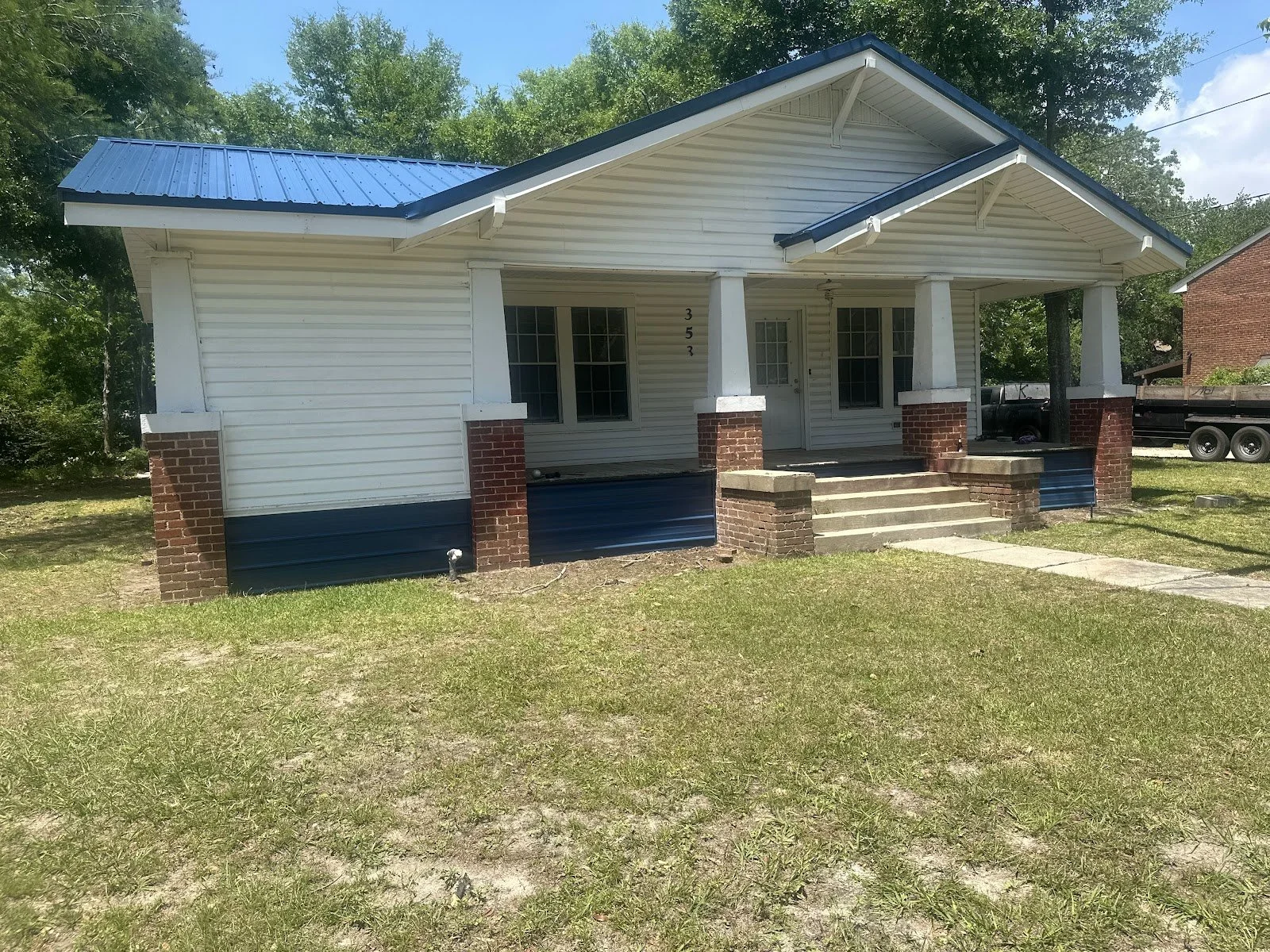
Metal Roof vs. Shingles: Cost, Lifespan, and Which Is Better for Tennessee Homes
Here's my honest take. For most folks around Middle Tennessee, architectural shingles are the better value — they cost less up front, give you 20 to 30 years, and they look right in just about every neighborhood. Metal costs roughly twice as much to put on, but standing seam will go 40 to 70 years and it shrugs off hail, wind, and summer heat like nothing else. Which one's right comes down to your budget, how long you're staying, and what your house can handle.
What They Actually Cost to Install
Typical installed ranges around here look like this:
- Architectural shingles: commonly $4–$9 per square foot installed
- Metal roofing: commonly $8–$16 per square foot installed
And not all metal is the same. Standing-seam — the kind with hidden fasteners and those clean vertical lines — sits at the top of that range. Exposed-fastener panels cost less up front, but every one of those visible screws will need attention down the road. That's why most folks who go metal go standing seam.
How Long They Last
This is where metal earns its money:
- Architectural shingles: typically 20–30 years here
- Standing-seam metal: typically 40–70 years
- Exposed-fastener metal: typically 25–40 years, depending on fastener upkeep
Tennessee weather is hard on roofs, no way around it. Summers bake them for months. Springs bring hail and straight-line winds. Even an ice storm now and then beats everything up. Shingles shed granules to heat and sun over the years — that's just what they do. Metal has no granules to lose. Its weak spots are denting from hail, which is usually cosmetic, and screws backing out on exposed-fastener systems.
If you're going to be in the house 15 years or less, shingles will take care of you. If it's your forever home, metal might be the last roof you ever buy.
How They Handle Tennessee Storms
Matters more here than most places. Every spring, hail and straight-line winds roll across Williamson, Maury, and the counties around us. And storm performance isn't just about thickness:
- Wind: Both hold up fine when they're installed right. Standing-seam panels lock together and fight uplift hard. Architectural shingles with a good nailing pattern and sealed tabs handle what most of our storms throw at them too.
- Hail: Metal dents before it tears, so hail damage on metal is usually just ugly — though it can still be worth an insurance conversation. Hail can crack shingles or strip granules, and granule loss takes years off a roof's life.
- Heat: Metal bounces more sun back than dark shingles, so attics run a little cooler and your AC catches a break. Shingles have improved too — plenty of architectural lines come in lighter, more reflective colors now.
I'll tell you what decides storm outcomes more than the material: the install. A correctly flashed, properly nailed shingle roof beats a sloppy metal job every single time.
Noise, Energy, and Everyday Living
The old knock on metal — "it'll sound like rain on a tin can" — is mostly out of date. With solid decking and attic insulation, metal sounds about the same as shingles from inside the house.
Energy-wise, metal's reflectivity is a real but modest plus in our summers. Though honestly, insulation and ventilation upgrades usually move the needle more than the roofing material itself.
Resale and Insurance
A standing-seam metal roof is a genuine selling feature around here and it makes a house stand out. Some insurance companies give modest premium credits for impact-resistant roofing, including certain metal systems and Class 4 impact-rated shingles. Worth a quick call to your agent before the project starts.
Which One Fits Your Home?
Go with architectural shingles if: you want the best value, you might move within 15 years, your neighborhood is mostly shingled — standing out too much cuts both ways at resale — or budget's the deciding factor.
Go with standing-seam metal if: this is your long-term home, you want the longest life with the least maintenance, and the upfront investment works for your budget. Most houses can carry it — metal is actually lighter than shingles per square foot, though framing and snow load still deserve a look.
Consider exposed-fastener metal if: you like the look and want something between the two on price. Just budget for screw work and re-sealing every so many years.
One thing worth saying about what we install: we're a GAF Certified contractor, and we put on GAF Timberline HDZ shingles for our shingle replacements. GAF makes shingles — our metal work is its own separate specialty, standing seam and exposed-fastener systems.
Frequently Asked Questions
Does a metal roof make the house hotter?
Usually the opposite. Metal reflects more sun than dark shingles, so attics under metal often run a touch cooler in summer.
Do shingles really only last 20–30 years in Tennessee?
That's the typical range for quality architectural shingles here, with good installation and ventilation. Cheap builder-grade shingles or bad attic ventilation can cut that noticeably. Great ventilation and a quality product can stretch it.
Getting a roof is a big decision, and the right material is the one that fits your house, your budget, and your plans. If you're in Williamson, Davidson, Dickson, Hickman, Cheatham, Rutherford, or Maury County, start with a free inspection and estimate. We'll look your roof over honestly, walk you through both options with real numbers for your home, and get you a virtual estimate within 24 hours. No pressure. Call 615-801-0959.
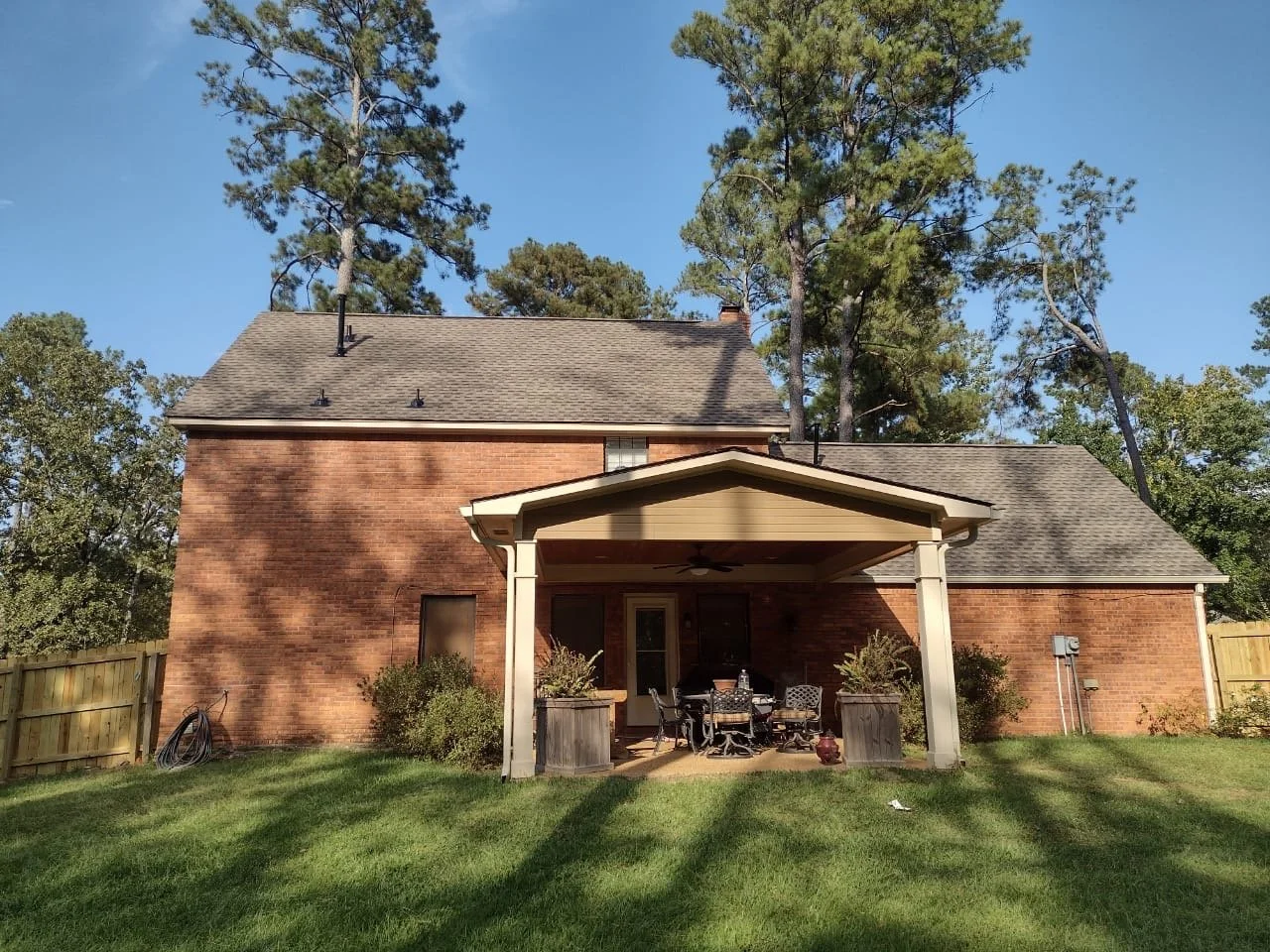
How Long Does a Shingle Roof Last in Tennessee?
An architectural shingle roof typically lasts 20–30 years. In Tennessee, though, the honest expectation usually sits on the lower half of that range. Spring hail, summer heat, humidity, wind — it all takes years off a roof. Ventilation and shingle quality matter just as much as the calendar. Here's how to figure out where your roof actually stands.
Why Tennessee roofs age faster
Heat. Tennessee summers bake shingles for months on end. All that heat speeds up granule loss and makes shingles brittle over time. A roof in Middle Tennessee works harder every July than the same roof would somewhere mild.
Storms. One good spring hailstorm can shave years off a roof's remaining life — bruising shingles, stripping granules. High winds loosen seals that never fully stick back down. Most Tennessee roofs live through several of these over their lifetime.
Humidity. Constant moisture brings the black algae streaks you see on roofs all over Tennessee. That's cosmetic. But moss in the shaded spots is a different story — it lifts shingles and traps water underneath.
Installation quality. Poor ventilation is the quiet killer. Trapped attic heat cooks the shingles from underneath, and it can cut years off a roof's life. Bad intake and exhaust is one of the most common things we find on roofs that died too early.
How to read your roof's remaining life
You don't have to be a roofer to see the warning signs:
Granule loss. Check the gutters and downspout exits. A few granules are normal. Heavy buildup — or bald patches on the shingles themselves — means the protective surface is going.
Curling and cupping. Edges turning up, corners lifting. Those are classic end-of-life signs, and repairs on curled shingles almost never hold.
Brittle shingles. If a shingle cracks when you bend it, the roof is near the end. An inspector can tell in seconds on a walk-through.
Algae vs. moss. Black streaks are ugly but harmless. Green moss on the north slopes is the one to worry about — it wedges shingles apart and holds moisture against the roof.
Age plus storm history. A 15-year-old roof that's lived through three big hail events can have less life left than a 22-year-old one that dodged them all. Age is a starting point. Condition is the verdict.
Getting the full 30 years (or close to it)
Ventilate properly. Balanced intake and exhaust keeps attic temperatures down and stretches shingle life. But it has to be balanced — ridge vents with blocked soffits, or soffits with no exhaust, means the system isn't really working.
Keep gutters clear. Backed-up gutters let water sit at the roof's edge, rotting the fascia and working under the first course of shingles.
Trim overhanging branches. Limbs scrape granules off and drop debris that holds moisture. And branches touching the roof are a highway for squirrels.
Address moss early. A zinc strip near the ridge or a professional cleaning takes care of moss before it does real damage. And never pressure-wash a shingle roof — it'll strip the granules right off.
Inspect annually. A quick yearly check — or a free professional inspection — catches the small stuff (a cracked boot, a lifted shingle) before it turns into big stuff.
FAQ
Do 30-year shingles actually last 30 years in Tennessee?
That "30-year" label is a warranty classification, not a promise. In Tennessee's climate, a well-ventilated architectural shingle roof usually delivers 20–30 years, and a lot of them land around 22–25 in real life.
Does the black algae on my roof mean I need a replacement?
No. Algae streaking is cosmetic — it doesn't shorten the shingle's life. If the shingles are still flexible and have their granules, a cleaning is all you need.
When does age alone mean replacement?
Once a Tennessee roof passes 20–22 years and shows curling, heavy granule loss, or brittleness, replacement is usually the better value. Repairs on shingles that far gone just don't hold.
Know your roof's real age story
Call 615-801-0959 for a free inspection from Rex Roofing & Construction. We'll check your shingles, your ventilation, and your storm wear, and give you an honest read on how much life is left — plus a flat-rate, no-pressure estimate if work's needed. Virtual estimates within 24 hours.
How Much Does Roof Repair Cost? A Homeowner's Guide to Typical Prices
Most roof repairs land somewhere in the $150–$2,500 range. What decides your number is simple: what broke, and how hard it is to get to. A cracked pipe boot is one of the cheapest fixes there is. Tearing into chimney flashing or a valley sits at the other end. Here's what common repairs usually cost around here, and why.
The most common repairs, by price range
Pipe boot replacement — roughly $150–$500. The rubber boot around your plumbing vents cracks in the Tennessee sun, usually after 8–12 years, and water runs right in around the pipe. Quick fix, localized — new boot, sealed and flashed right. This is the leak source we see more than any other.
Shingle patch (wind damage) — roughly $200–$600. A few wind-lifted or missing shingles on an otherwise healthy roof. Depends on how many and whether we can still match the shingle. Patches blend best when the roof is under 10–12 years old and that color is still being made.
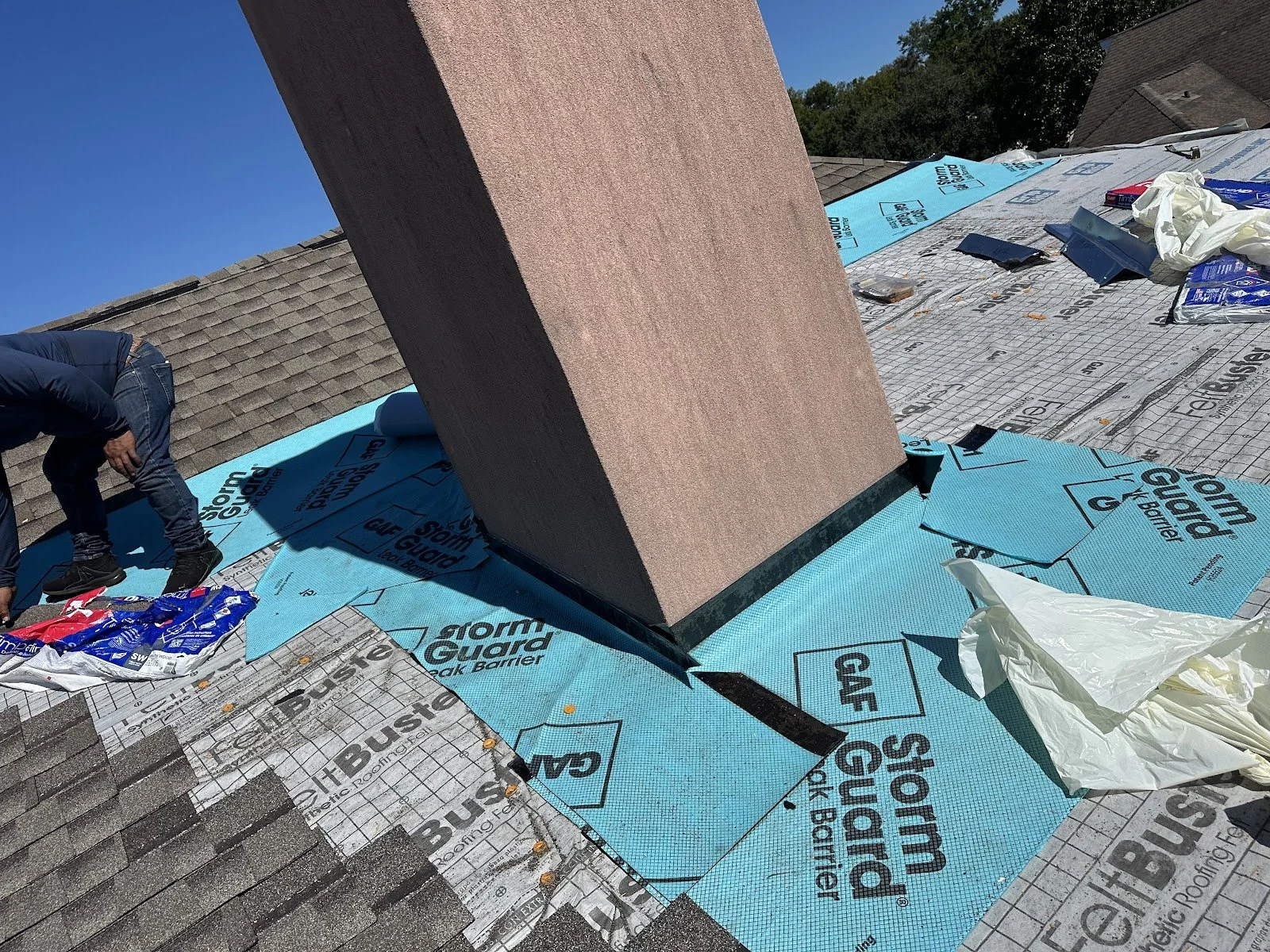
Chimney flashing repair — roughly $500–$1,500. Chimney flashing is a layered metal system — step flashing plus counter-flashing — and it's a classic leak spot. Doing it right means lifting the surrounding shingles and rebuilding the whole system. It's skilled work, but it's cheap compared to the water damage it stops.
Valley repair — roughly $600–$2,000. Valleys carry the most water on your roof, so they fail first and leak hardest. The fix usually means opening up the valley, replacing the underlayment and valley metal, and laying the shingles back. If two valleys are going on an older roof, it's time to start thinking replacement.
Skylight re-flashing — roughly $500–$1,200. Most "skylight leaks" aren't the skylight at all — they're the flashing around it. Re-flashing costs a fraction of replacing the whole unit.
Deck repair — roughly $200–$500 per sheet. If we find rotted plywood during a repair, it has to go before anything else does. Good contractors give you the per-sheet price up front so it never blindsides you.
Why the same leak costs different amounts on different homes
Roof pitch. A steep roof needs more setup, more safety gear, more time. A repair on a walkable pitch might take half the effort.
Access. Chimney sitting in the middle of a steep slope, a leak over a vaulted ceiling with no attic access, three stories up — it all adds labor.
Shingle matching. On older roofs, your exact shingle might not be made anymore. A close match is fine for a small patch, but don't expect it to disappear — especially on the front of the house.
Extent of water damage. A leak you catch in week one is a boot replacement. A leak that's been dripping for a year can mean rotted decking, stained ceilings, maybe mold. Finding it early is always cheaper. Always.
What should be included in a repair estimate
A real estimate tells you five things: exactly what broke and where, what we're going to do about it (name the materials — not just "fix leak"), whether we might find decking damage and what that costs, the warranty on the work itself, and a flat price. For a small job, you shouldn't be handed an open-ended hourly arrangement.
FAQ
Why do repair quotes vary so much?
Different scopes. One guy quotes the boot. The other quotes the boot, the flashing, and the deck repair he spotted underneath. Ask each one exactly what their price covers, then compare apples to apples.
Can I repair a roof myself?
If it's small, low, and walkable, a handy homeowner can do it. But I'll warn you — most leaks get misdiagnosed from the ground. The stain on your ceiling is almost never right under where the water's getting in. A bad DIY repair wastes money and lets the real damage keep spreading. Get a professional's eyes on it first.
Will a repair come with a warranty?
It should. Ask for a written workmanship warranty on the repair itself — separate from whatever warranty covers the materials.
Get a real number for your repair
Call 615-801-0959 for a free inspection and estimate from Rex Roofing & Construction. We'll show you photos of exactly what failed, give you a flat-rate price with no pressure, and tell you straight whether a repair is the right call. Virtual estimates available within 24 hours.
Signs Your Roof Has Storm or Hail Damage (and What to Do Next)
The first answer: hail and wind damage is often invisible from the ground. The reliable signs are dented gutters and downspouts, lifted or creased shingles, and heavy granule loss in gutters. If a severe storm just moved through, get a free professional inspection within days — damage documentation matters for insurance, and coverage depends on your policy.
What hail actually does to a roof
Hail doesn't always punch holes. More often it bruises shingles: the impact knocks granules off and fractures the shingle mat underneath. You can feel these bruises with your hand before you can see them — soft spots on shingles that look intact from the driveway. Those bruises expose the roof to UV and water, and they shorten the shingle's life dramatically. This is why hail damage is a leading cause of premature roof failure in Middle Tennessee, where spring storms are a fact of life.
Signs you can spot yourself
Dented gutters, downspouts, and trim. Soft metals dent where shingles merely bruise. If your gutters took hail hits, your roof almost certainly did too. This is the homeowner's best ground-level clue.
Granule piles in gutters and at downspout exits. Some granule loss is normal aging, but a sudden heavy accumulation after a storm means the hail stripped the shingles' protective surface.
Dented or cracked roof vents and flashing. Check what you can see safely: box vents, turbine vents, and pipe flashings that are dented, bent, or cracked.
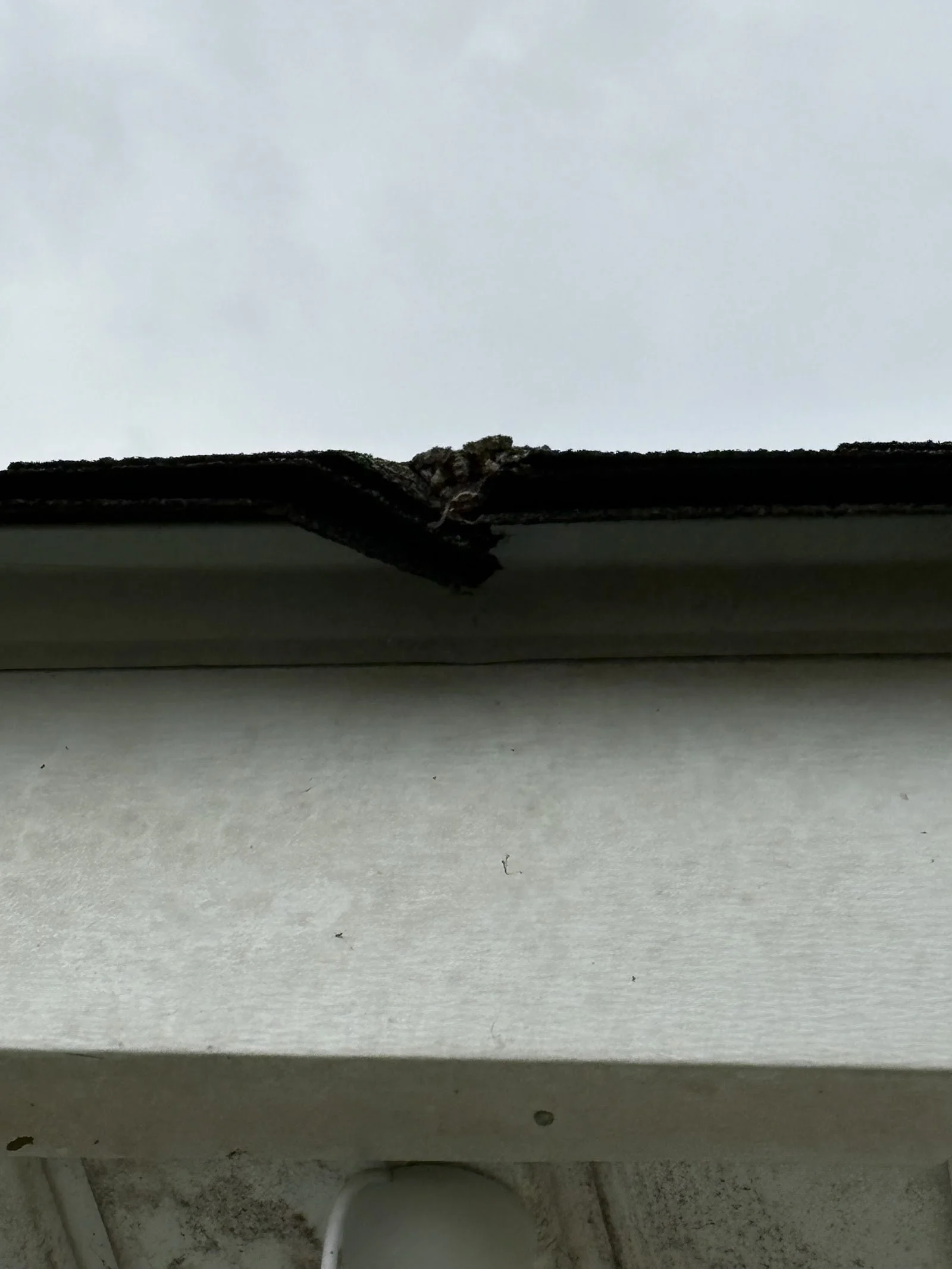
Lifted, creased, or missing shingles. High winds lift shingle tabs and crease them along the seal line. A creased shingle may lie flat again — but the seal is broken and it will lift in the next wind event.
Water stains on ceilings. The most urgent sign. By the time you see a stain, water has been entering for a while. Don't wait on this one.
What wind damage looks like
Wind damage is more visible than hail but easier to dismiss as "a few shingles." The danger signs: shingles creased along the adhesive strip, whole shingles missing (exposing underlayment or bare deck), and ridge caps lifted or gone. One missing shingle in a valley can let gallons of water in during a single storm.
What to do after a storm
- Document everything, fast. Photograph your roof, gutters, siding, and any dents or debris — from the ground, safely. Note the storm's date and time. Documentation made promptly is much stronger for insurance purposes.
- Get a professional inspection. A roofer experienced with storm damage checks shingles by hand for bruising, inspects flashing, vents, and gutters, and documents everything in writing with photos. Many homeowners miss hail damage entirely on their own — and so do some inspectors who don't know what bruising feels like.
- Call your insurer promptly if damage is found. Coverage depends on your specific policy — sudden storm damage is often covered, but timelines and terms vary. An inspection report with photos makes the claims process far smoother.
- Don't sign with door-knockers. Storm chasers flood Tennessee neighborhoods after every hail event. Hire a local, established contractor who will still be here when the warranty needs honoring.
FAQ
How soon after a storm should I have my roof inspected?
As soon as safely possible — within days is ideal. Hail bruises are easiest to document before weathering obscures them, and insurance policies have filing windows.
My neighbor's roof was replaced after the storm — does mine need it too?
Not necessarily. Hail hits unevenly, and roof age and shingle type change the outcome. The only answer that counts is an inspection of your roof.
Will insurance cover hail damage?
Coverage depends on your policy. Sudden hail and wind damage is commonly covered under standard homeowner policies, while wear and age are not. Document damage, file promptly, and ask your adjuster to walk the roof with your contractor.
Get your roof checked now
If severe weather just came through Williamson or Maury County, don't guess from the ground. Call 615-801-0959 for a free storm-damage inspection — we'll walk the roof, document everything with photos, and give you a straight answer plus a flat-rate, no-pressure estimate. Virtual estimates within 24 hours.
Roof Repair or Full Replacement: How to Know Which One You Need
This is the question I get asked most. Short answer: if the damage is small and contained and the roof still has life in it, repair it. If the damage is everywhere, the roof is at the end of its road, or you keep paying for repairs that don't stick — replace it. There's a rule of thumb I use: when the repair bill gets close to 30% of what a full replacement would cost, replacement is the better money. Long term, anyway.
Start with the roof's age and condition
An architectural shingle roof around here lasts 20–30 years, depending on ventilation, shingle quality, and how many storms it's lived through. If your roof is under 12–15 years old and in good shape overall, and the problem is a leaking pipe boot or a few shingles the wind grabbed or some bad flashing around the chimney — that's a repair. Easy call.
But if the roof is 20+ years old and you're finding trouble in more than one spot, you're probably throwing money at a roof that's already told you it's done. And every repair after that buys you less time than the one before. Those bills stack up fast.
The 30% rule of thumb
Add up what the repairs would cost. Getting close to 30% of a full replacement? Replace. You end up with a brand-new roof and real warranties instead of a patched-up old one that might buy you a few more years. It's a rule of thumb, not a law — but it's saved a lot of folks from a bad decision.
What points toward repair
- One leak, one spot. Water's getting in around one place — a pipe boot, the chimney, a vent — and the rest of the roof looks fine.
- Storm damage is localized. A branch or a wind event tore up one slope, but the surrounding roof is in good shape.
- The roof is young. Under 15 years with dimensional shingles, there's plenty of life left. Fix the bad spot and move on.
- Flashing failure. Chimney flashing, step flashing, valley metal — these wear out long before the shingles do. Replacing flashing without touching the rest of the roof is classic repair work.
What points toward replacement
- Widespread granule loss. Go look in your gutters. Heavy granule buildup means the shingles are shedding their armor. That's age, not an accident, and there's no fixing it.
- Curling, cupping, or brittle shingles. If a shingle cracks when you bend it, patching isn't going to hold. Repairs just won't stick to a roof like that.
- Multiple leaks or repeated repairs. If you've paid somebody to come out more than once in the last couple of years, stop paying for patches. Add up what you've already spent — you might be near that 30% already.
- Sagging or soft decking. If there's structural trouble under the surface, a tear-off is the only honest way to deal with it.
- Insurance math. After serious hail or wind damage, sometimes your policy decides for you — depending on what's covered, replacement can be the obvious move.
The Tennessee factor
Our weather is rough on roofs. Spring hail and high winds, summer heat baking everything, humidity wearing it all down. A roof that might last 28 years somewhere mild could be worn out at 22 here. That's real. When you're on the fence, nothing beats an actual inspection with photos of your roof's real condition.
FAQ
Can I just repair a 25-year-old roof?
Honestly? It's rarely worth it. At 25, shingles are brittle, repairs fail, and you'll likely damage the shingles around the patch just doing the work. Once a roof passes 20–22 years, replacement is almost always the better value.
Is it okay to layer new shingles over old ones?
Sometimes it's allowed, but I don't recommend it. It adds weight, hides whatever the decking is doing, and the new roof won't last as long. A full tear-off is how you do it right if you want that roof to last decades.
What does a free inspection actually include?
A real one. We get on the roof (or work from good photos), check the shingles, flashing, vents, valleys, and gutters, then hand you a straight answer in writing — repair it, replace it, or leave it alone. All three are on the table.
Not sure which camp you're in?
That's exactly what the free inspection is for. Call 615-801-0959. We'll look at your roof, show you photos of what we find, and give you an honest recommendation with a flat-rate estimate. No pressure. Virtual estimates within 24 hours.
How Much Does a Roof Replacement Cost in Middle Tennessee?
Around here, a full roof replacement on a typical house usually runs somewhere in the $8,000–$20,000 range, and most architectural shingle jobs land between $4 and $9 a square foot installed. But here's the honest truth: nobody can tell you your number without standing on your roof. Not me, not a calculator on the internet, not your neighbor. Size, pitch, material, what's underneath — it all changes the price. The only way to know yours is a real inspection, and ours is free.
What goes into the price
Roofing isn't one price with a roof-shaped hole in it. It's a bunch of pieces, and knowing them means nobody can pull one over on you.
Roof size and complexity. We price by the "square," which is 100 square feet. Bigger roof, more material and more labor — that's the easy part. But complexity hits just as hard. Valleys, dormers, chimneys, skylights, two stories — every one of those slows a crew down and eats material. And a steep roof? That takes longer and needs more safety setup than one you can walk on.
Tear-off vs. overlay. A full tear-off means we strip everything down to the decking and start fresh, new underlayment and all. An overlay just nails new shingles over the old ones. It's cheaper up front, sure — but it hides whatever's going on underneath and adds weight to the roof. I recommend a full tear-off just about every time, especially if the roof's already been overlaid once.
Decking repairs. Once the old shingles come off, we can finally see the plywood. If it's rotted or damaged, it has to be replaced before anything goes back on. Our estimates list a per-sheet price for that, so it's never a surprise.
Underlayment and accessories. This is where cheap bids hide their tricks. Quality underlayment, ice-and-water shield in the valleys and around penetrations, real flashing, ridge vents, pipe boots — skip any of that and you've got a leak waiting to happen. A roof is a 20–30 year deal. Cutting corners on the stuff you can't see is how you end up paying twice.
Material choice. Architectural shingles are the standard around Middle Tennessee — that's what most of our homes get. Impact-rated shingles or standing-seam metal cost more up front, but they'll outlast shingles by a long shot. Metal commonly runs 40–70 years.
Why bids vary so much
You get three estimates and one is $5,000 cheaper than the other two. I see this all the time. That gap is in the fine print — thinner shingles, flashing they "reuse," no underlayment to speak of, nothing set aside for decking. A real estimate should spell it all out: the shingle brand and line, underlayment type, the flashing work, ventilation, tear-off and disposal, decking price. If it's just one number on a page, that tells you plenty.
And be careful with the door-knockers after a storm, quoting half of market. If a price sounds too good to be true, it is. The work will match the price.
How to get your real number
Calculators and per-square-foot ranges will get you in the ballpark, but a quote has to come from your actual roof — the square footage, the pitch, how many layers come off, what the decking looks like, how many penetrations. A proper estimate means a real inspection, with photos of the problem areas, and nobody pressuring you to "sign today."
We do free inspections and estimates, and if you don't want to wait, we can do a virtual estimate within 24 hours. Flat rate, no pressure. You get a clear number with a real breakdown, not a sales pitch.
FAQ
What is the average cost of a new roof on a 2,000 sq ft house?
For architectural shingles, most homes that size fall in the $8,000–$20,000 range depending on pitch, complexity, and what the tear-off looks like. Steep or complicated roofs trend higher.
Does insurance cover roof replacement?
Depends on your policy and what caused the damage. Storm or hail damage is often covered. Age and wear are not. Take photos of any damage and file quickly — an inspection report goes a long way.
Is financing available for a roof replacement?
Yes. We offer financing through Enhancify, so you don't have to write the whole check at once. Checking your options is a quick soft credit inquiry — it won't touch your credit score.
Ready for your real number?
Enough with the ranges. Call 615-801-0959 for a free inspection and estimate — in person, or a virtual estimate within 24 hours — and you'll get the exact flat-rate cost for your roof. No pressure.
Get a FREE ESTIMATE Today
No pressure. No hassle. Just an honest assessment from Middle Tennessee’s most trusted GAF Certified roofing contractor. Most estimates completed within 24 hours.
- ✅ GAF Certified Contractor
- ✅ Licensed & Insured
- ✅ Free Estimates
- ✅ 2,000+ Roofs Completed